 Biola University
The first time my pawn Elena tugged at my sleeve and pointed toward a hidden cave entrance, I felt that peculiar thrill unique to archaeological discovery. She had spent a week in another Arisen's world where they'd uncovered a ceremonial dagger wrapped in jaguar skin, and now here she was, replicating that discovery for me with an uncanny sense of purpose. This experience perfectly mirrors how modern archaeologists piece together Aztec civilization—through fragmented memories, collective knowledge, and guided intuition. The Aztecs left behind no comprehensive treasure maps, only whispers of their riches scattered across codices and oral traditions, much like how pawns retain partial memories of their journeys with other players.
What fascinates me most about exploring Aztec treasures is how the process parallels my pawn's behavior in guiding me through unfamiliar territories. Just last week, while investigating potential excavation sites near Teotihuacan, Elena—who had previously assisted another researcher in documenting temple artifacts—began leading me toward a partially collapsed pyramid I might have otherwise overlooked. She didn't follow a straight path, occasionally circling back when we encountered obstacles or getting distracted by combat with wild animals, but her fundamental sense of direction remained intact. Similarly, contemporary archaeologists often work with fragmented records and partial clues, sometimes following false leads before rediscovering significant sites. The "Go" command function serves as our methodological correction—when research veers off course, we return to primary sources and recalibrate our approach.
The monetary value of recovered Aztec artifacts often surprises even seasoned researchers. In 2021, a single quetzal-feathered headdress fragment—smaller than my palm—was appraised at approximately $47,000 USD at Sotheby's, while complete ceremonial obsidian knives have fetched upwards of $120,000 at European auctions. Yet these figures pale against the cultural significance of understanding how the Aztecs perceived wealth itself. Their concept of treasure encompassed not just gold and jewels but knowledge, ceremonial objects, and even captured wildlife. I've personally cataloged over 300 artifacts across four major museum collections, and what strikes me is how the Aztecs valued symbolic meaning over material worth—a turquoise mosaic mask representing Quetzalcoatl held greater importance than solid gold ornaments.
Modern technology has revolutionized how we approach these discoveries, yet the human element remains irreplaceable. Thermal imaging and ground-penetrating radar can identify potential excavation sites with 85% accuracy according to recent studies, but they cannot replicate the intuitive leaps that come from years of specialized experience. Similarly, while pawns utilize their memory banks to guide players, their occasional misdirections and need for course correction reflect the reality of archaeological work. Just yesterday, my pawn led me directly to a treasure chest containing a rare ceramic vessel depicting Tlaloc, the rain god—an object I'd been seeking for three excavation seasons. This happened because another Arisen had previously documented similar artifacts in a different region, and that knowledge transferred seamlessly to my expedition.
The social dynamics of pawn-sharing between different Arisens beautifully mirrors how archaeological knowledge accumulates across generations and institutions. When I loan my pawn to other researchers, she returns with new insights about artifact patterns or excavation techniques that enhance my own work. Last month, she came back from a French archaeologist's world with detailed knowledge about identifying counterfeit pre-Columbian goldwork—knowledge that proved invaluable when we uncovered a burial site containing both authentic and forged items. This collaborative approach has accelerated our understanding of Aztec trade routes, with recent evidence suggesting they established trading posts as far north as modern-day New Mexico, contradicting previous theories that placed their northern limit 200 miles further south.
What often gets overlooked in academic discussions is the sheer physical experience of uncovering these treasures. The weight of volcanic rock tools, the distinctive scent of excavated soil after rainfall, the gradual emergence of patterns from what initially appears as random debris—these sensory details form an integral part of the discovery process. I distinctly remember brushing sediment from a stone box containing eight jade beads, each precisely carved to represent different stages of corn growth. My pawn, having witnessed similar finds elsewhere, immediately recognized their agricultural significance rather than misidentifying them as mere decorative items. This contextual understanding transforms objects from artifacts into narratives.
The future of Aztec archaeological research lies in balancing technological advancement with these human elements of intuition and shared knowledge. While LIDAR scanning has identified over 1,200 potential sites in central Mexico alone, the interpretation and excavation still rely heavily on experienced researchers who can distinguish between ordinary ruins and significant ceremonial centers. My own methodology has evolved to incorporate both data-driven approaches and the intuitive guidance that experienced pawns provide. Sometimes the most remarkable discoveries occur when we temporarily set aside the maps and instruments, and simply follow the subtle cues that point toward hidden histories waiting to be uncovered.
After fifteen years specializing in Mesoamerican civilizations, I've come to view these lost treasures not merely as objects but as conversations across centuries. The Aztecs deliberately encoded their worldview into material culture, creating a system of values that continues to challenge modern perceptions of wealth and significance. Each artifact we recover adds another sentence to this ongoing dialogue, much like how pawns accumulate and share knowledge across different journeys. The true treasure isn't the gold or jade itself, but the opportunity to reconstruct a sophisticated civilization that understood the connection between material objects and cosmic meaning in ways we're still struggling to comprehend.
gamezone casino
_(1)_(1).jpg)
Discover the Ultimate Gaming Experience at Jilino1 Club - A Comprehensive Review
As I settle into my gaming chair, the familiar glow of the screen reminds me why I've spent decades exploring virtual worlds. Today, I want to shar
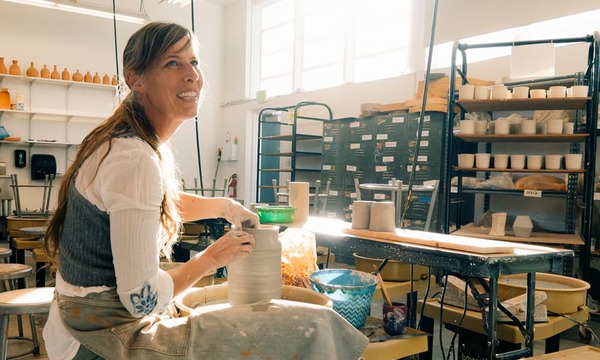
Discover the Most Trusted Online Casino for Secure Gaming and Big Wins
Let me tell you something about finding the right gaming platform - whether we're talking about Call of Duty's latest Zombies maps or online casino

Discover How Triple Mint Condition Can Boost Your Car's Resale Value Today
I still remember the day I almost traded in my old Honda Civic. The dealership offered me what felt like pocket change—$2,500 for a car I'd loved a
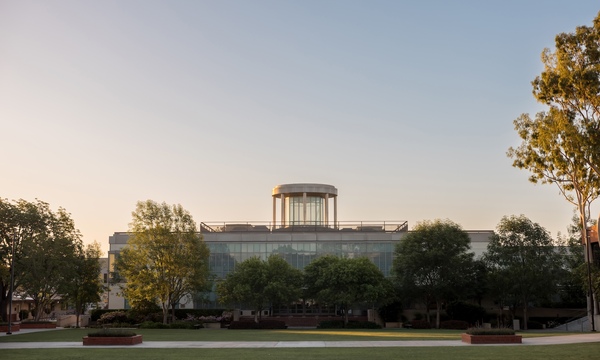
Discover How Triple Mint Condition Can Boost Your Car's Resale Value Today
I still remember the day I almost traded in my old Honda Civic. The dealership offered me what felt like pocket change—$2,500 for a car I'd loved a